What Is Speaker Type? A Guide for Subwoofers Buyers (2026)
As an Amazon Associate we earn from qualifying purchases. Links on this page are affiliate links.
Understanding Speaker Type for Your Setup
Speaker type explained helps you match equipment to your room and listening habits. This spec defines the physical form and power source of the audio device. It determines where the unit sits and how it connects to your system. You need this information to plan your space and wiring correctly.
Powered speakers contain built-in amplifiers. You plug them directly into a wall outlet. This removes the need for a separate receiver. The amplifier is matched to the drivers inside. This integration often simplifies setup for subwoofers and satellite speakers.
Center channel speakers are designed for the middle of your soundstage. They sit below or above your television. Their primary role is to anchor dialogue and on-screen action. They typically have a horizontal driver layout. This orientation matches the width of your screen.
Bookshelf speakers are compact and versatile. They fit on shelves, desks, or stands. You can place them at ear level. They work well in small rooms or as part of a larger surround system. Their size allows for flexible placement without overwhelming the space.
Floorstanding speakers are tall and heavy. They rest directly on the floor. They often include multiple drivers and larger cabinets. This design allows for deeper bass response without a separate subwoofer. They require more floor space but deliver high volume and dynamic range.
In-wall speakers are hidden inside your drywall. They save floor and shelf space. Installation requires cutting holes in your walls. They provide a clean aesthetic but may offer less bass than larger boxes.
In-ceiling speakers mount into your ceiling grid or drywall. They are ideal for background music or home theater. They direct sound downward into the room. They keep the visual clutter to a minimum.
Choosing the right type ensures your system fits your physical space. It also affects how you connect components. Check the listing for these details before buying.
Speaker Type Options Compared
Powered
Powered speakers include a built-in amplifier, so you connect them directly to a source like a receiver or preamp. You do not need a separate amp. This simplifies wiring and setup. It is practical for subwoofers like the Kicker Hideaway 10" or Polk Audio Monitor XT12. These units fit under seats or on floors. The trade-off is less flexibility. You cannot upgrade the amplifier separately. If the amp fails, you replace the whole unit. This type suits buyers who want plug-and-play convenience and reliable bass without extra gear.
Center Channel
Center channel speakers are designed for the middle position in a home theater setup. They focus on dialogue and on-screen action. This guide does not list specific center channel models in the current product data. This type is essential for clear voice reproduction in movie watching. You place it below or above your TV. It anchors the soundstage. Without it, dialogue can get lost in music or effects. This option is best for viewers who prioritize clarity over surround immersion. Check your system requirements before buying.
Bookshelf
Bookshelf speakers are compact units that sit on shelves, stands, or desks. They are versatile and fit in small rooms. This guide does not list specific bookshelf models in the current product data. They often require separate amplifiers. This adds complexity but allows for component upgrades. They are good for stereo music and small home theaters. The trade-off is limited bass output. You may need a subwoofer to fill in low frequencies. This type suits listeners who value space efficiency and detailed mid-range performance over raw volume.
Floorstanding
Floorstanding speakers are tall units that rest directly on the floor. They often include multiple drivers for wide frequency coverage. The Definitive Technology DM70 is an example. It integrates a 10-inch subwoofer into a tall cabinet. This design provides deep bass and wide dispersion in one unit. You do not need a separate subwoofer for many rooms. The trade-off is size. They require floor space and can dominate a room visually. This type suits home theater enthusiasts who want full-range sound and high output without cluttering the room with extra boxes.
In-Wall
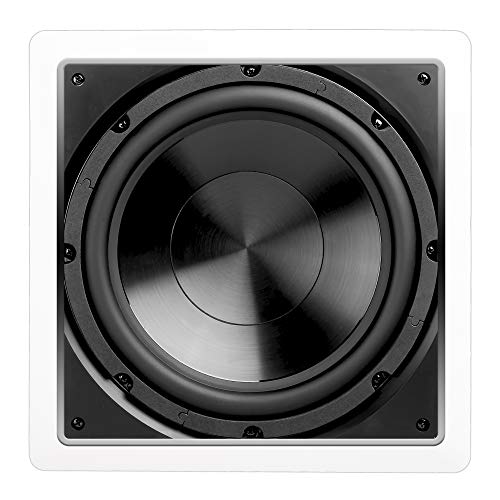
In-wall speakers are installed inside your wall cavities. They are invisible when finished. The OSD Audio IWS10 10 Inch In-Wall Subwoofer is an example. It fits into walls for permanent installations. You need construction skills to cut holes and mount them. This type saves floor and shelf space entirely. The trade-off is installation difficulty. You cannot easily move them. If you rent or change layouts often, this is not ideal. It suits homeowners who want a clean, minimalist look and have the ability to modify their walls for permanent audio solutions.
In-Ceiling
In-ceiling speakers are mounted in your ceiling. They provide ambient sound without visible equipment. This guide does not list specific in-ceiling models in the current product data. They are common in multi-room audio systems. You need access to the ceiling space for installation. This type is good for background music or surround sound effects. The trade-off is lower bass response and harder maintenance. You cannot easily upgrade drivers. This option suits buyers who prioritize invisible aesthetics and whole-house audio coverage over high-fidelity main channel performance.
Is Speaker Type Worth Your Attention
Who needs it
You need this spec if you are building a system from scratch or upgrading specific zones. The form factor dictates your placement options and acoustic performance. Powered models simplify your wiring by removing the need for a separate amplifier. This is ideal for compact setups or where running power cables is difficult. Center channel speakers are essential for clear dialogue in home theaters. Bookshelf units offer flexibility for smaller rooms or elevated stands. Floorstanding designs deliver deeper bass without needing a subwoofer in some cases. In-wall and in-ceiling types save space but require construction work. If your room layout is tight or your aesthetic demands hidden components, matching the speaker type to your physical constraints is critical. Ignoring this leads to poor fit and compromised sound quality.
Who can skip it
You can skip detailed research on this spec if you are replacing a single component in an existing, working system. If you already own a receiver and compatible speakers, the type is likely already determined. Focus your energy on driver size, frequency response, and sensitivity instead. These metrics define the actual audio performance more than the cabinet shape. Also, if you are buying a pre-matched home theater package, the manufacturer has already selected the correct types for you. Do not waste time comparing bookshelf against floorstanding if you have no plans to change your room setup. Prioritize connectivity options like HDMI or optical inputs if you are dealing with legacy equipment. The physical form is secondary when the acoustic output and system integration are already solved by your current gear.
Speaker Type Glossary
Application
The intended use case, such as home theater or music studio. This spec guides you toward designs optimized for specific acoustic environments and listening habits.
Impedance
Electrical resistance measured in ohms. Common values are 4 or 8 ohms. Lower impedance draws more power, which may affect compatibility with your amplifier.
Enclosure Type
The physical box design, like sealed or ported. Sealed boxes offer tight bass, while ported designs boost low-frequency output for deeper impact in your room.
Connectivity
Input methods such as RCA, XLR, or wireless. These ports determine how you link the subwoofer to your receiver or preamp for signal transmission.
Amplifier Type
The internal power source, often Class D or Class AB. This spec indicates how the unit boosts signals, affecting efficiency and heat generation during use.
Speaker Type
The form factor, like active or passive. Active units have built-in amps, while passive models require an external amplifier to produce sound from your source.
Woofer Size
The diameter of the main driver, typically 10 to 15 inches. Larger sizes generally move more air, providing deeper bass extension and higher output levels.
Size
Physical dimensions including height, width, and depth. These measurements help you determine if the unit fits your designated space and acoustic placement strategy.
Quick picks
| # | Product | Best for | Price |
|---|---|---|---|
| 1 | Kicker Hideaway 10" Powered Under-Seat Subwoofer | compact under-seat bass installation | Check price of Kicker Hideaway 10" Powered Under-Seat Subwoofer on Amazon |
| 2 | Definitive Technology DM70 Floorstanding Tower | home theater setups needing integrated bass | Check price of Definitive Technology DM70 Floorstanding Tower on Amazon |
| 3 | OSD Audio IWS10 10 Inch In-Wall Subwoofer 200W | permanent in-wall home theater installations | Check price of OSD Audio IWS10 10 Inch In-Wall Subwoofer 200W on Amazon |
| 4 | Polk Audio Monitor XT12 12" Powered Subwoofer | Deep bass with a 12-inch driver | Check price of Polk Audio Monitor XT12 12" Powered Subwoofer on Amazon |
| 5 | Edifier T5s 8" Powered Subwoofer | compact desktop and powered bookshelf speaker setups | Check price of Edifier T5s 8" Powered Subwoofer on Amazon |
| 6 | Audioengine S6 Mini Subwoofer | Small rooms needing compact powered bass | Check price of Audioengine S6 Mini Subwoofer on Amazon |
Our 6 picks

Kicker Hideaway 10" Powered Under-Seat Subwoofer
Best for: compact under-seat bass installation
- Speaker Type
- Powered (what this guide is about)
- Woofer Size
- 10"
- Power Handling
- 180 W
- Enclosure Type
- Low-profile
- Connectivity
- Quick-Connect Molex plug and harness
- Application
- Cars
View on Amazon: Kicker Hideaway 10" Powered Under-Seat Subwoofer Affiliate link
This Kicker 46HS10 is a 10-inch powered subwoofer designed to fit under your seat. It uses an 180-watt amplifier to drive the driver. The unit is ultra-compact, measuring just 3.12 inches high. It includes a remote bass control for easy adjustment. You will appreciate the quick-connect Molex plug for simple installation. It suits those needing discreet bass without taking up floor space.
Pros
- 10-inch woofer size for solid bass response
- 180-watt amplifier provides strong power handling
- Ultra-compact height of 3.12 inches fits under seats
- Includes remote bass control for level adjustment
Cons
- Renewed condition means it is not new
- Weight of 14 pounds adds to vehicle load
- No built-in display to show settings
Good fit if
- You need a subwoofer that fits under a seat
- You want a compact solution with minimal installation hassle
- You prefer using a remote to adjust bass levels
Skip if
- You require a brand new unit with full warranty
- You need a floorstanding speaker for large rooms
- You want a subwoofer with a built-in display
Verdict: Kicker Hideaway 10" Under-Seat Subwoofer delivers focused bass in a tiny footprint. It is the right pick for drivers who need hidden audio gear that installs quickly.

Definitive Technology DM70 Floorstanding Tower
Best for: home theater setups needing integrated bass
- Speaker Type
- Floorstanding (what this guide is about)
- Woofer Size
- 10"
- Amplifier Type
- Built-in Class D
- Enclosure Type
- Passive radiator
- Size
- Single
- Dimensions
- 16 × 11.3 × 47.4 inches
View on Amazon: Definitive Technology DM70 Floorstanding Tower Affiliate link
The Definitive Technology DM70 is a floorstanding speaker with a built-in 10-inch powered subwoofer and 180W Class D amplifier. It uses bipolar arrays and passive radiators for room-filling sound. This single black unit measures 47.4 inches tall. It suits home theater setups needing deep bass and enveloping audio without a separate sub.
Pros
- Integrated 10-inch powered subwoofer with 180W Class D amplification
- Bipolar array design with front and back focusing speakers
- Two 3XR-optimized passive radiators for enhanced bass impact
- Patented Linear Response Waveguide for wide off-axis dispersion
Cons
- Sold as a single unit rather than a pair
- Height of 47.4 inches may not fit small spaces
- No mention of included remote or app control
Good fit if
- You want a single speaker that includes a subwoofer
- You need a floorstanding model for home theater
- You prefer enveloping bipolar sound distribution
Skip if
- You require a pair of speakers in the box
- You have limited vertical space under 47 inches
- You need a compact bookshelf or in-wall design
Verdict: Definitive Technology DM70 Tower Speaker integrates a 10-inch subwoofer into a tall floorstanding cabinet for buyers who want deep bass and wide dispersion in one unit.
OSD Audio IWS10 10 Inch In-Wall Subwoofer 200W
Best for: permanent in-wall home theater installations
- Speaker Type
- In-Wall (what this guide is about)
- Woofer Size
- 10 inch
- Power Handling
- 200 watts
- Dimensions
- 18.8 × 18.8 × 7 inches
View on Amazon: OSD Audio IWS10 10 Inch In-Wall Subwoofer 200W Affiliate link
This OSD Audio IWS10 is a 10-inch in-wall subwoofer designed to save floor space. It handles 200 watts of power and features a paintable grille for a flush look. You must pair it with a separate amplifier, such as the recommended SMP200. It fits into standard wall cavities to deliver deep bass without cluttering your room.
Pros
- 10-inch polypropylene woofer with butyl rubber surround
- 200-watt power handling capacity
- Paintable frame and grille for custom finishes
- Slim 7-inch depth for easy in-wall installation
Cons
- Passive design requires a separate amplifier purchase
- No included mounting hardware for drywall
- Limited to in-wall placement only
Good fit if
- You want to hide bass equipment inside walls
- You have a dedicated wall cavity for installation
- You already own a compatible subwoofer amplifier
Skip if
- You need a self-contained powered unit
- You lack the tools for wall cutting
- You prefer portable speaker options
Verdict: OSD Audio 10 inch In-Wall Subwoofer fits buyers who prioritize invisible audio gear and have the construction skills to install it into their walls. It is a solid choice for permanent home theater builds where space is at a premium.

Polk Audio Monitor XT12 12" Powered Subwoofer
Best for: Deep bass with a 12-inch driver
- Speaker Type
- Powered (what this guide is about)
- Woofer Size
- 12"
- Power Handling
- 100W
- Amplifier Type
- Class A/B
- Connectivity
- RCA, LFE, 5-way binding post
- Dimensions
- 18 × 16 × 16 inches
View on Amazon: Polk Audio Monitor XT12 12" Powered Subwoofer Affiliate link
The Polk Audio Monitor XT12 is a 12-inch powered subwoofer designed for deep bass output. It uses a 100W Class A/B amplifier to reach frequencies down to 24Hz. The unit features a rigid MDF cabinet to minimize resonance. You can adjust the crossover between 80Hz and 160Hz and select phase polarity. It connects via RCA, LFE, or binding posts. This model suits home theater setups needing substantial low-frequency extension.
Pros
- 12-inch Dynamically Balanced Woofer for deep bass
- 100W Class A/B amplifier power output
- Frequency response reaches down to 24Hz
- Variable crossover control from 80Hz to 160Hz
- Multiple connection options including RCA and binding posts
Cons
- 39-pound weight makes placement difficult
- Large footprint requires significant floor space
- No remote control included in specifications
Good fit if
- You need bass extension down to 24Hz
- You want a 12-inch driver for higher output
- You prefer manual crossover and phase adjustments
Skip if
- You need a compact subwoofer for tight spaces
- You require a remote control for convenience
- You want a lightweight unit for easy moving
Verdict: Polk Audio Monitor XT12 12" Powered Subwoofer delivers heavy bass with a 12-inch driver and 100W amplifier. It fits buyers who prioritize deep low-frequency response and manual tuning over compact size or remote convenience.
Edifier T5s 8" Powered Subwoofer
Best for: compact desktop and powered bookshelf speaker setups
- Speaker Type
- Powered (what this guide is about)
- Woofer Size
- 8"
- Power Handling
- 70W RMS
- Amplifier Type
- Built-in, Class-D
- Enclosure Type
- Ported, front-firing
- Connectivity
- RCA
View on Amazon: Edifier T5s 8" Powered Subwoofer Affiliate link
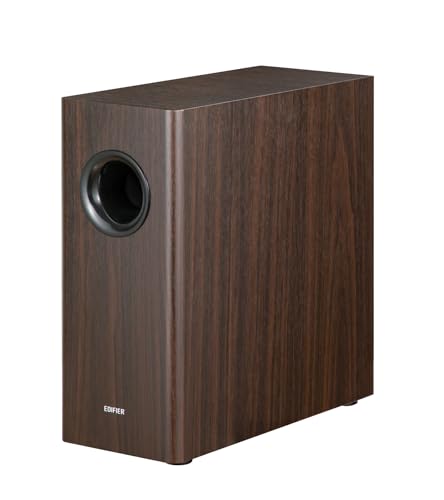
The Edifier T5s is a compact powered subwoofer featuring an 8-inch front-firing woofer driven by a 70W RMS Class-D amplifier. It extends down to 35Hz and includes a 30Hz to 160Hz low-pass filter with 0°/180° phase control. If you have active bookshelf speakers lacking a dedicated sub output, its RCA passthrough connections route stereo signals cleanly.
Pros
- Built-in 70W RMS Class-D amplifier with 35Hz low-frequency reach
- Adjustable low-pass filter from 30Hz to 160Hz plus 0°/180° phase switch
- RCA pass-through input and output for setups without a sub output
- Slim 6.69-inch width with 18mm MDF cabinet and auto-standby
Cons
- 8-inch driver is smaller than 10-inch and 12-inch alternatives
- 70W RMS power provides less output headroom than higher-wattage units
- Series pass-through connection supports wired line-in only
Good fit if
- You need a slim powered subwoofer to pair with desktop or bookshelf speakers.
- You lack a dedicated subwoofer output and require RCA pass-through routing.
Skip if
- You need high output for large rooms requiring a 10-inch or 12-inch driver.
- You require speaker-level wire terminals rather than line-level RCA ports.
Verdict: Edifier T5s 8-Inch Powered Subwoofer integrates cleanly into compact stereo and desktop setups that need low-end reinforcement down to 35Hz without external amplification.

Audioengine S6 Mini Subwoofer
Best for: Small rooms needing compact powered bass
- Speaker Type
- Powered (what this guide is about)
- Woofer Size
- 6"
- Power Handling
- 210W
- Enclosure Type
- Front-firing
- Dimensions
- 9.92 × 8.74 × 9.96 inches
- Weight
- 15.4 pounds
View on Amazon: Audioengine S6 Mini Subwoofer Affiliate link
The Audioengine S6 Mini is a compact, front-firing powered subwoofer designed for tight spaces. It features a 6-inch woofer and delivers 210 watts of power. Its slim profile measures 8.74 inches wide and 9.96 inches high. This unit suits listeners who need deep bass without a large footprint. It connects easily to home theater systems and works with the optional W3 wireless adapter for flexible placement.
Pros
- 6-inch woofer for focused bass output
- 210 watts of powered handling
- Front-firing enclosure design
- Slim dimensions fit small areas
- Compatible with wireless adapter
Cons
- 6-inch driver is smaller than competitors
- No included wireless transmitter
- Limited to front-firing orientation
Good fit if
- You need a subwoofer for a small room
- You want a front-firing design for easy placement
- You prioritize a compact footprint over raw power
Skip if
- You require a 10-inch or larger woofer
- You need built-in wireless connectivity
- You want a rear-firing enclosure for corner placement
Verdict: Audioengine S6 Mini 6-inch Powered Subwoofer offers precise bass in a small package. It fits buyers who value space-saving design over maximum low-frequency extension.
Specifications side by side
| Spec | Kicker Hideaway 10" Powered Under-Seat Subwoofer | Definitive Technology DM70 Floorstanding Tower | OSD Audio IWS10 10 Inch In-Wall Subwoofer 200W | Polk Audio Monitor XT12 12" Powered Subwoofer | Edifier T5s 8" Powered Subwoofer | Audioengine S6 Mini Subwoofer |
|---|---|---|---|---|---|---|
| Woofer Size | 10" | 10" | 10 inch | 12" | 8" | 6" |
| Power Handling | 180 W | not stated | 200 watts | 100W | 70W RMS | 210W |
| Amplifier Type | not stated | Built-in Class D | not stated | Class A/B | Built-in, Class-D | not stated |
| Enclosure Type | Low-profile | Passive radiator | not stated | not stated | Ported, front-firing | Front-firing |
| Connectivity | Quick-Connect Molex plug and harness | not stated | not stated | RCA, LFE, 5-way binding post | RCA | not stated |
| Application | Cars | not stated | not stated | not stated | not stated | not stated |
| Speaker Type | Powered | Floorstanding | In-Wall | Powered | Powered | Powered |
| Size | 10 Inch | Single | 10 Inch | 12" | not stated | Matte |
| Dimensions | 12.1 × 9.87 × 3.12 inches | 16 × 11.3 × 47.4 inches | 18.8 × 18.8 × 7 inches | 18 × 16 × 16 inches | 15.7 × 6.69 × 16.1 inches | 9.92 × 8.74 × 9.96 inches |
| Weight | 14 pounds | not stated | not stated | 39 pounds | 22.9 pounds | 15.4 pounds |
| Model | 46HS10 | 300569-01-00-101 | IWS10 | MXT12 | CAUSAM-T5S-BROWN | S6 |
| Color | not stated | Black | IWS10 | Black | Brown | Gray |
Frequently asked questions
What is a powered subwoofer?
A powered subwoofer has a built-in amplifier, allowing direct connection to your receiver or source. You skip the need for a separate amp. This simplifies wiring significantly. The Kicker Hideaway 10" and Polk Audio Monitor XT12 use this design. They deliver focused bass or deep low-frequency response without extra gear.
Do floorstanding speakers include subwoofers?
Some floorstanding speakers integrate subwoofer drivers into the cabinet itself. This combines deep bass with wide dispersion in one tall unit. The Definitive Technology DM70 Tower Speaker features a 10-inch subwoofer inside its 47.4-inch height. This design suits home theater setups needing integrated bass without a separate box.
What is an in-wall subwoofer?
An in-wall subwoofer mounts directly into your wall structure for a permanent, invisible installation. It saves floor space entirely. The OSD Audio IWS10 is a 10-inch model with 200W power handling. It fits buyers who prioritize hidden audio gear and have the construction skills for a permanent home theater build.
How do I choose a compact powered sub?
Look for smaller driver sizes and lightweight cabinets. The Edifier T5s features an 8-inch driver and weighs 22.9 pounds. It integrates cleanly into compact desktop setups. The Audioengine S6 Mini offers a 6-inch driver in a 9.96-inch height. These options provide precise bass in small packages for space-saving designs.
What is the difference between bookshelf and floorstanding types?
Bookshelf speakers are smaller and often sit on stands or shelves. Floorstanding speakers are taller and rest directly on the floor. Some floorstanding models, like the Definitive Technology DM70, include built-in subwoofers. This adds deep bass capability to the tall cabinet. You choose based on room size and dispersion needs.
Can I hide a subwoofer in my ceiling?
In-ceiling speakers mount in the ceiling, but the list focuses on other types. In-wall subwoofers like the OSD Audio IWS10 hide in walls. Powered subwoofers like the Kicker Hideaway 10" fit under seats. You select based on whether you want invisible gear in walls or compact units in tight spaces.