What Is Ways? A Guide for Speakers Buyers (2026)
As an Amazon Associate we earn from qualifying purchases. Links on this page are affiliate links.
Understanding Speaker Ways Explained
The term "ways" refers to the number of individual drivers inside a speaker cabinet. Each driver is responsible for reproducing a specific range of sound frequencies. This design choice directly impacts how clear and accurate the audio sounds. When you see "ways explained" in product listings, it tells you how the speaker divides the audio task.
A 2-Way speaker uses two drivers. One handles low frequencies, which are the deep bass notes. The other handles high frequencies, which include vocals and cymbals. A crossover network splits the audio signal between these two drivers. This setup is common in bookshelf speakers and many subwoofers that include a built-in tweeter. It offers a balanced sound without requiring complex internal components.
A 3-Way speaker adds a third driver. This middle driver handles mid-range frequencies. Mids are crucial for human voices and most instruments. By dedicating a separate unit to this range, the speaker can reproduce details more accurately. The bass driver focuses only on low notes. The tweeter focuses only on high notes. This division of labor often results in clearer sound, especially in larger cabinets.
You will find these labels on spec sheets. Look for the "ways" or "configuration" field. It will list either 2-Way or 3-Way. Some products may list more, but these two are standard for home audio.
Why does this matter to you? More ways can mean better separation of sounds. It reduces distortion because each driver works within its optimal range. However, it also means more internal components. This can increase the size and complexity of the unit. For most home setups, a 2-Way design provides sufficient clarity. A 3-Way design is ideal if you prioritize vocal precision and have space for a larger cabinet. Check the driver count to ensure it matches your listening needs.
Understanding 2-Way and 3-Way Speaker Designs
2-Way
A 2-way speaker uses two drivers: a woofer for low frequencies and a tweeter for high frequencies. This simple design is common in center channels like the Sony SS-CS8M2 and in-ceiling models such as the Polk Audio RC60i. It offers a balanced sound with fewer crossover points, which can reduce phase distortion. You get reliable performance for dialogue and general music. The trade-off is less detailed high-frequency separation compared to more complex designs. This setup suits buyers who want straightforward, effective audio without extra complexity. It is ideal for discreet installations or compact bookshelf setups where space and simplicity matter most.
3-Way
A 3-way speaker adds a midrange driver between the woofer and tweeter. This allows each driver to focus on a narrower frequency range. The Edifier R2750DB MKII and Yamaha NS-IW660 use this configuration. It often results in clearer vocals and more precise imaging. The dedicated midrange driver handles human voices and instruments with greater accuracy. However, the design is more complex and usually requires a larger cabinet. You may need a more powerful amplifier to drive the additional components. This option suits audiophiles or home theater enthusiasts who prioritize detail and accuracy over compact size. It is best for listeners who want studio-grade clarity in their listening space.
Who Needs Two Or Three Ways
Who needs it
You should prioritize speaker ways if you value precise sound staging and detailed imaging. A 3-way design includes a dedicated midrange driver, which handles vocals and instruments with greater clarity. This separation reduces distortion when the woofer and tweeter share the workload. If you listen to complex music or watch movies with rich dialogue, the extra driver helps maintain accuracy across different volumes. You will notice cleaner transitions between bass and highs. This configuration is ideal for critical listening in a dedicated room. The additional component ensures that no single driver is stretched beyond its optimal range. You get a more natural presentation where every frequency has its own space. If accuracy and detail are your top priorities, the extra way provides a tangible improvement in overall fidelity.
Who can skip it
You can ignore the number of ways if you are on a tight budget or have limited space. A 2-way speaker is simpler and often more efficient for general use. It covers bass and treble effectively without the added cost or complexity of a midrange driver. If you primarily listen to podcasts, news, or background music, the difference may be negligible. You might prefer a smaller cabinet that fits easily on a shelf or in a corner. The 2-way design is also easier to integrate into a basic stereo setup. Focus on driver size and enclosure material instead. These factors often matter more for your specific room than the number of internal components. Keep it simple unless you have the space and need for high-end precision.
Speaker Specs Glossary
Application
Where you place the speaker, such as in-wall, in-ceiling, or free-standing. This determines mounting needs and room integration for your setup.
Impedance
Electrical resistance measured in ohms. Common values are 4, 6, or 8 ohms. Match this to your receiver to ensure safe power delivery and optimal performance.
Enclosure Type
The cabinet design, like sealed, ported, or bandpass. This shape influences bass response, efficiency, and the physical footprint required for installation in your space.
Connectivity
How the speaker links to your system. Options include standard speaker wire terminals, binding posts, or wireless modules for flexible placement without long cables.
Amplifier Type
Whether the speaker has a built-in powered amp (active) or relies on an external receiver (passive). Active speakers simplify wiring but add internal heat.
Speaker Type
The category of the driver, such as bookshelf, floorstanding, center channel, or subwoofer. This defines the primary role each unit plays in your audio chain.
Woofer Size
The diameter of the low-frequency driver, typically 5 to 15 inches. Larger woofers generally move more air for deeper bass, while smaller ones offer tighter response.
Size
Physical dimensions like height, width, and depth. Check these measurements to ensure the speaker fits your shelf, stand, or allocated space in the room.
Quick picks
Our 6 picks

Sony SS-CS8M2 2-Way Center Channel Speaker
Best for: clear dialogue in Sony-equipped home theaters
- Ways
- 2-Way (what this guide is about)
- Speaker Type
- center channel
- Woofer Size
- 3.94-Inch
- Configuration
- 2-Way 3-Driver
- Enclosure Type
- bass reflex
- Dimensions
- 8.66 × 16.9 × 5.75 inches
View on Amazon: Sony SS-CS8M2 2-Way Center Channel Speaker Affiliate link
This Sony center channel speaker uses a 2-way, 3-driver configuration with two 3.94-inch woofers and a high-precision tweeter. The bass reflex enclosure supports clear dialogue and low-end response. Measuring 16.9 inches wide and weighing 12.3 pounds, it fits standard TV stands. You get faithful vocal reproduction without needing complex setup. It pairs well with Sony AV receivers for a cohesive home theater experience.
Pros
- Two 3.94-inch woofers for boosted low-end frequencies
- High-precision tweeter ensures faithful vocal reproduction
- Bass reflex enclosure for distortion-free sound
- Reinforced cellular cone for undistorted audio
Cons
- Single speaker unit requires a stereo pair for full channel coverage
- Limited to center channel use rather than surround placement
- No mention of wall-mounting hardware in specifications
Good fit if
- You want clear dialogue from a dedicated center channel
- You own a Sony AV receiver for seamless integration
- You prefer a 2-way driver layout for vocals
Skip if
- You need a bookshelf speaker for stereo music listening
- You require a wireless or Bluetooth connectivity option
- You are looking for a single unit to cover all channels
Verdict: Sony SS-CS8M2 2-Way 3-Driver Center Speaker delivers focused dialogue clarity through its dual woofers and precision tweeter. It suits viewers prioritizing vocal intelligibility and brand-matched components over multi-purpose versatility.

Polk Audio RC60i 6.5" In-Ceiling Speaker Pair
Best for: discreet, moisture-resistant ceiling audio
- Ways
- 2-Way (what this guide is about)
- Speaker Type
- in-ceiling
- Woofer Size
- 6.5"
- Configuration
- 2-Way
- Tweeter Type
- silk dome
- Dimensions
- 10.8 × 10.8 × 3.3 inches
View on Amazon: Polk Audio RC60i 6.5" In-Ceiling Speaker Pair Affiliate link
The Polk Audio RC60i is a pair of 2-way in-ceiling speakers with a 6.5-inch woofer and a 0.75-inch silk dome tweeter. These speakers use a Dynamic Balance polypropylene woofer for rich sound. They feature moisture-resistant materials, making them suitable for humid spaces like bathrooms. The paintable grille allows them to blend into your ceiling. They are designed for home theater and music in rooms where floor-standing speakers are not practical.
Pros
- 2-way configuration with 6.5-inch woofer and 0.75-inch silk dome tweeter
- Moisture-resistant construction for use in steamy or humid environments
- Paintable grille helps the speakers blend into your ceiling decor
- Swiveling tweeter allows you to aim sound directly at your listening spot
Cons
- Only 2-way design, unlike 3-way competitors with additional mid-range drivers
- Round shape requires a circular cutout, which may limit placement flexibility
- Passive design requires a separate amplifier or receiver to function
Good fit if
- You want to hide speakers in the ceiling for a clean look
- You need moisture-resistant speakers for a bathroom or kitchen
- You want to aim sound directly at your seating area
Skip if
- You prefer 3-way speakers for more detailed mid-range reproduction
- You need active speakers with built-in amplification
- You require rectangular speakers to fit existing square cutouts
Verdict: Polk Audio RC60i 6.5" 2-Way In-Ceiling Speakers are a practical choice for listeners who need discreet, moisture-resistant audio in humid rooms. They suit those who value adjustable tweeter direction over the added complexity of a 3-way driver configuration.

Edifier R2750DB MKII 3-Way Powered Bookshelf Speakers
Best for: 3-way active desktop setups with subwoofer expansion
- Ways
- 3-Way (what this guide is about)
- Speaker Type
- Powered Bookshelf
- Woofer Size
- 7″
- Configuration
- 3-Way
- Power Handling
- 144W RMS
- Tweeter Type
- Silk dome
View on Amazon: Edifier R2750DB MKII 3-Way Powered Bookshelf Speakers Affiliate link
The Edifier R2750DB MKII is a 3-way powered bookshelf speaker system rated at 144W RMS. It uses a 7-inch woofer, 4.5-inch mid-range, and 1-inch silk-dome tweeter. This configuration delivers balanced sound for desktop or monitor setups. It supports Hi-Res Audio via LDAC Bluetooth and includes a SUB OUT for external subwoofers. You get versatile connectivity with HDMI eARC, optical, and coaxial inputs.
Pros
- 3-way design with 7-inch woofer, 4.5-inch mid-range, and 1-inch silk-dome tweeter
- 144W RMS power handling driven by quad Class-D amplifiers
- Hi-Res Audio Wireless certified with LDAC Bluetooth for high-resolution streaming
- SUB OUT port allows connection to an external subwoofer for deeper bass
- Includes physical remote and 9-band EQ tuning via the EDIFIER ConneX app
Cons
- Heavy build at 36.5 pounds per pair
- Bulky dimensions of 15.4 inches in height
- No mention of included stand or mounting hardware
Good fit if
- You need a 3-way speaker system for detailed music reproduction
- You want to add a subwoofer later via the SUB OUT port
- You require HDMI eARC connectivity for direct TV audio input
Skip if
- You prefer 2-way speaker designs for simpler signal paths
- You need compact speakers that fit in tight spaces
- You want passive speakers that require a separate amplifier
Verdict: Edifier R2750DB MKII 3-Way Powered Bookshelf offers a complete 3-way active solution with 144W RMS power and Hi-Res LDAC support. It suits users who want studio-grade accuracy and expandable bass without buying separate components.

Yamaha NS-IC800 8-Inch In-Ceiling Speaker Pair
Best for: ceiling installations needing 8-inch bass
- Ways
- 2-Way (what this guide is about)
- Speaker Type
- In-Ceiling Speakers
- Woofer Size
- 8-Inch
- Configuration
- 2-Way
- Power Handling
- 140W / 50W
- Impedance
- 8 Ohm
View on Amazon: Yamaha NS-IC800 8-Inch In-Ceiling Speaker Pair Affiliate link
The Yamaha NS-IC800 is a 2-way in-ceiling speaker designed for clean integration. It features an 8-inch woofer and a dome tweeter with a 3.5 kHz crossover. Power handling reaches 140W maximum. The 8-ohm impedance ensures compatibility with most receivers. Its 4.3-inch depth allows for standard ceiling installation. This pair suits listeners who want hidden audio without sacrificing low-frequency output.
Pros
- 8-inch woofer for deeper bass response
- Dome tweeter for clear high frequencies
- 140W maximum power handling
- 8-ohm impedance for broad amplifier compatibility
Cons
- Limited to 2-way configuration
- Requires external amplifier or receiver
- White finish only available in data
Good fit if
- You need a discreet in-ceiling solution
- You want 8-inch bass drivers in ceilings
- You have a standard 8-ohm amplifier
Skip if
- You prefer 3-way speaker designs
- You need built-in amplification
- You require multiple color options
Verdict: Yamaha NS-IC800 8-Inch 2-Way In-Ceiling Speaker offers solid bass for its size. It fits rooms where you want hidden speakers with decent low-end performance.
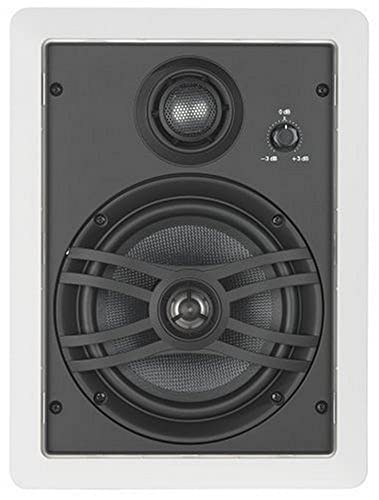
Yamaha NS-IW660 3-Way In-Wall Speaker
Best for: custom in-wall surround channels
- Ways
- 3-Way (what this guide is about)
- Speaker Type
- in-wall
- Configuration
- 3-way
- Dimensions
- 3.1 × 14.4 × 11.2 inches
- Weight
- 4.6 pounds
View on Amazon: Yamaha NS-IW660 3-Way In-Wall Speaker Affiliate link
The Yamaha NS-IW660 is a 3-way in-wall speaker designed for custom installations. It features a rectangular design with dimensions of 14.4 by 11.2 inches. The grille is paintable, allowing it to blend with wall surfaces. Weighing 4.6 pounds, it offers clear dialogue and rich music playback. This speaker suits those seeking immersive sound for surround channels or distributed audio systems.
Pros
- 3-way configuration for detailed sound reproduction
- Paintable grille blends with wall decor
- Rectangular shape fits standard wall cavities
- Lightweight at 4.6 pounds per speaker
Cons
- No included mounting hardware listed
- Requires in-wall cutout preparation
- No remote or app control
Good fit if
- You want a 3-way in-wall speaker
- You need paintable grilles for custom looks
- You are building a surround system
Skip if
- You prefer bookshelf speakers
- You want plug-and-play wireless speakers
- You need a compact 2-way design
Verdict: Yamaha NS-IW660 3-Way In-Wall Speaker is a solid choice for custom home theater builds. It fits buyers who prioritize acoustic detail and aesthetic integration over convenience.

ELAC Debut 3.0 5.25-inch Bookshelf Speakers
Best for: listeners seeking clear highs and efficient bookshelf speakers
- Ways
- 2-Way (what this guide is about)
- Speaker Type
- Bookshelf Speakers
- Woofer Size
- 5.25 inch
- Configuration
- 2-Way
- Tweeter Type
- 1” Aluminum Dome Tweeter
- Enclosure Type
- Bass Reflex
View on Amazon: ELAC Debut 3.0 5.25-inch Bookshelf Speakers Affiliate link
The ELAC Debut 3.0 DB53-BK is a 2-way bookshelf speaker system featuring a 1-inch aluminum dome tweeter and a 5.25-inch aramid fiber woofer. The bass reflex enclosure and internal bracing reduce cabinet vibration for clearer sound. At 13.3 pounds each, these speakers are easy to drive and fit well on standard shelves or stands for home audio setups.
Pros
- 1-inch aluminum dome tweeter for high-frequency clarity
- 5.25-inch aramid fiber woofer for extended low-frequency response
- Internal bracing reduces unwanted cabinet vibrations
- Bass reflex enclosure enhances bass output
- Efficient design requires less amplifier power
Cons
- 5.25-inch woofer size is smaller than 6.5-inch alternatives
- No remote control included
- No wireless connectivity options listed
Good fit if
- You want clear highs from an aluminum dome tweeter
- You prefer efficient speakers that are easy to drive
- You need compact bookshelf speakers for limited space
Skip if
- You require deep bass from a larger 6.5-inch driver
- You need wireless streaming capabilities
- You prefer a 3-way speaker configuration
Verdict: ELAC Debut 3.0 5.25" Bookshelf Speakers deliver precise highs and efficient performance for listeners who value clarity and compact design over deep bass extension.
Specifications side by side
| Spec | Sony SS-CS8M2 2-Way Center Channel Speaker | Polk Audio RC60i 6.5" In-Ceiling Speaker Pair | Edifier R2750DB MKII 3-Way Powered Bookshelf Speakers | Yamaha NS-IC800 8-Inch In-Ceiling Speaker Pair | Yamaha NS-IW660 3-Way In-Wall Speaker | ELAC Debut 3.0 5.25-inch Bookshelf Speakers |
|---|---|---|---|---|---|---|
| Speaker Type | center channel | in-ceiling | Powered Bookshelf | In-Ceiling Speakers | in-wall | Bookshelf Speakers |
| Woofer Size | 3.94-Inch | 6.5" | 7″ | 8-Inch | not stated | 5.25 inch |
| Configuration | 2-Way 3-Driver | 2-Way | 3-Way | 2-Way | 3-way | 2-Way |
| Power Handling | not stated | not stated | 144W RMS | 140W / 50W | not stated | not stated |
| Impedance | not stated | not stated | not stated | 8 Ohm | not stated | not stated |
| Tweeter Type | not stated | silk dome | Silk dome | Dome | not stated | 1” Aluminum Dome Tweeter |
| Connectivity | not stated | not stated | Bluetooth 6.0, HDMI eARC, Optical | not stated | not stated | not stated |
| Enclosure Type | bass reflex | not stated | not stated | not stated | not stated | Bass Reflex |
| Size | not stated | 1 Pair | not stated | 8 Inch | 660 | 5.25" |
| Ways | 2-Way | 2-Way | 3-Way | 2-Way | 3-Way | 2-Way |
| Dimensions | 8.66 × 16.9 × 5.75 inches | 10.8 × 10.8 × 3.3 inches | 10.8 × 8.54 × 15.4 inches | 4.3 × 11 × 11 inches | 3.1 × 14.4 × 11.2 inches | 18 × 8 × 14 inches |
| Weight | 12.3 pounds | 5.7 pounds | 36.5 pounds | 4.2 pounds | 4.6 pounds | 13.3 pounds |
| Model | SSCS8M2.UC | AW0060-B|4 | R2750DB MKII | NS-IC800WH | NS-IW660 | DB53-BK |
| Color | not stated | White | Walnut | White | White | Black Ash |
Frequently asked questions
What is a 2-way speaker design?
A 2-way speaker uses two drivers: a woofer for low frequencies and a tweeter for high frequencies. This simple configuration is common in center channels like the Sony SS-CS8M2 and in-ceiling models such as the Polk Audio RC60i. It offers a balanced sound without the complexity of additional midrange units.
What is a 3-way speaker design?
A 3-way speaker adds a dedicated midrange driver between the woofer and tweeter. This setup handles vocals and instruments with greater clarity by reducing distortion. The Edifier R2750DB MKII and Yamaha NS-IW660 use this design to provide studio-grade accuracy and detailed imaging for critical listening environments.
Do 3-way speakers sound better than 2-way?
3-way designs often deliver superior vocal clarity and reduced distortion because the midrange driver handles specific frequencies independently. This separation allows the woofer and tweeter to focus on their respective ranges. You should choose this if you prioritize acoustic detail and precise imaging over simpler setups.
Can I use 2-way speakers for home theater dialogue?
Yes, 2-way speakers are effective for dialogue when designed for that purpose. The Sony SS-CS8M2 center channel uses dual woofers and a precision tweeter to deliver focused vocal intelligibility. This makes it a strong choice for viewers who want clear speech without the complexity of a 3-way configuration.
What speaker types support 3-way designs?
3-way designs appear in bookshelf and in-wall speakers. The Edifier R2750DB MKII offers a powered bookshelf solution with 144W RMS power. The Yamaha NS-IW660 provides a 3-way in-wall option for custom home theater builds. These models suit users seeking detailed sound and aesthetic integration.
Which in-ceiling speakers are 2-way?
The Polk Audio RC60i and Yamaha NS-IC800 are both 2-way in-ceiling speakers. The RC60i features a 6.5-inch woozer and adjustable tweeter direction. The NS-IC800 includes an 8-inch woofer for deeper bass. Both offer discreet audio solutions suitable for humid rooms or hidden installations.
How do I choose between 2-way and 3-way?
Choose 2-way for simplicity and cost-effectiveness in standard setups. Select 3-way if you need precise sound staging and detailed imaging. The ELAC Debut 3.0 offers efficient 2-way performance for compact designs. The Yamaha NS-IW660 provides 3-way detail for custom builds requiring high acoustic fidelity.